
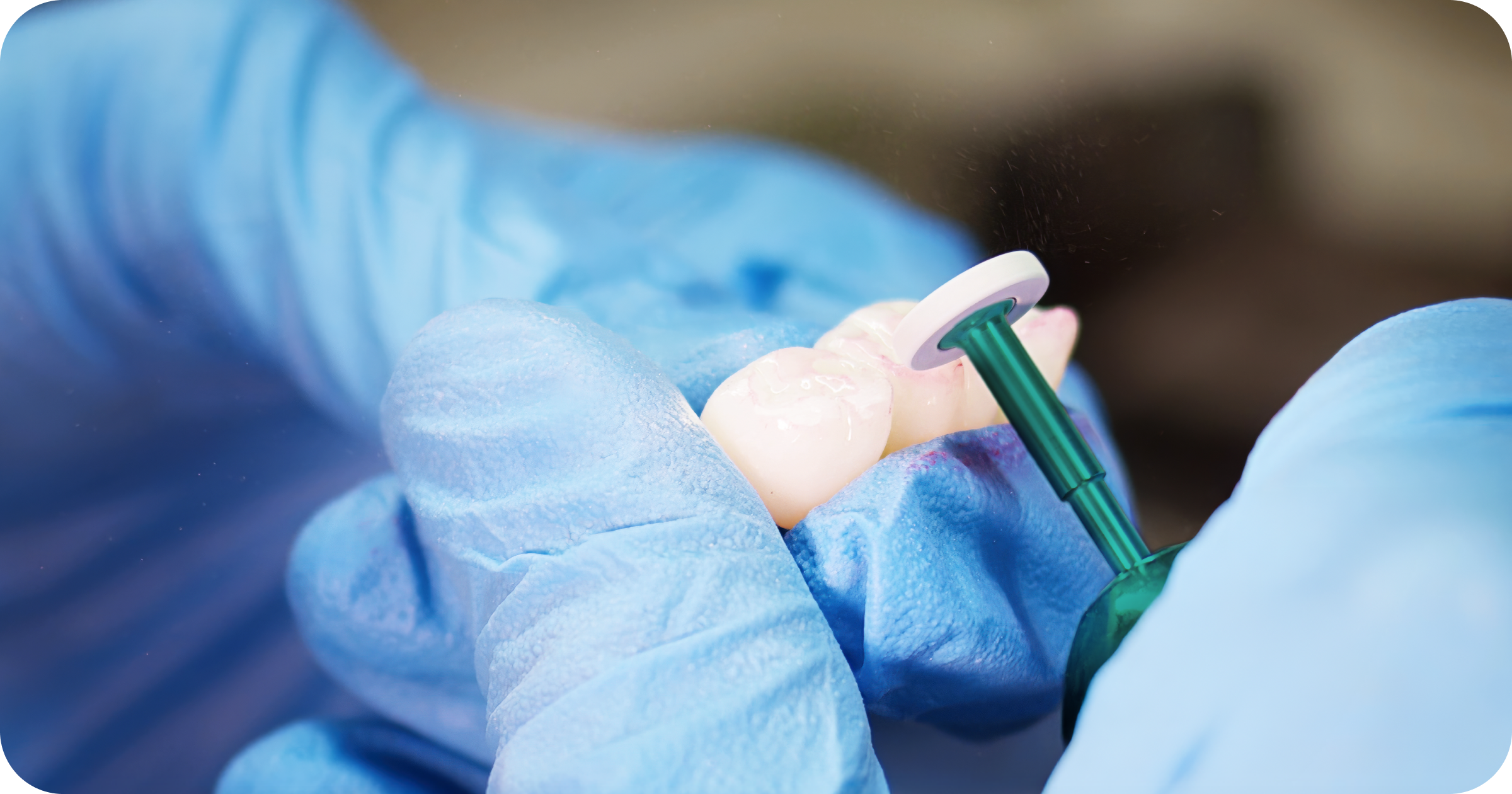
Canadian dentistry is moving fast. Is your practice keeping up?
Across Canada, from multi-location group practices in Toronto and Vancouver to independent clinics in Calgary, Ottawa, and beyond, a quiet operational revolution is underway.
Dental practices are delivering permanent crowns in a single appointment. Implant patients are leaving with a provisional or final restoration the same day their fixture is placed. Cosmetic patients are previewing their veneers digitally before a single tooth is touched and saying yes to treatment plans, they would have previously deferred.
This is same-day digital dentistry. And in 2026, it is no longer the exclusive territory of early adopters with specialist-level budgets. It is a real, scalable clinical capability that Canadian practices of every size and structure are beginning to integrate and one that is reshaping patient expectations from Halifax to Victoria.
This guide is for the Canadian dental professional who wants the unfiltered truth: what digital workflows for same-day care actually require, what they cost in the Canadian market, how to navigate Health Canada considerations, and whether your clinic is genuinely ready to make the transition.
Defining "same-day" in the Canadian clinical context
 Precision matters here. Same-day dentistry is not a single procedure. It is a category of workflows, each with different clinical requirements, equipment demands, and patient selection criteria.
Same-day crowns represent the most established and widely adopted application in Canada. The clinical evidence supporting chairside CAD/CAM restorations has been building for over a decade and is well-represented in journals including the Journal of Prosthetic Dentistry and the Journal of Dentistry. The Canadian Dental Association recognizes digital restorative technologies as part of the evolving standard of care in contemporary dental practice.
Same-day veneers follow a similar digital workflow but demand a higher level of esthetic design sophistication. Digital smile design tools enable clinicians to collaborate with patients on the final esthetic outcome before preparation begins, dramatically improving case acceptance, particularly for comprehensive cosmetic treatment plans.
Immediate load implants: In appropriate cases, a provisional or final restoration can be placed at the time of fixture insertion. The Royal College of Dental Surgeons of Ontario (RCDSO), the College of Dental Surgeons of British Columbia (CDSBC), and equivalent provincial colleges provide the clinical and ethical framework within which Canadian clinicians must operate when implementing immediate loading protocols. Patient selection, primary stability, and documented informed consent are the non-negotiable foundations of safe implementation.
Full-arch immediate loading represents the most complex workflow in this family. It requires integrated CBCT-guided surgical planning, a highly coordinated clinical team, and rigorous patient selection, but delivers transformative outcomes for patients who have lived with failing dentition.
The digital workflow stack: what Canadian practices need
 CBCT imaging
For implant planning, CBCT is the non-negotiable starting point. All CBCT units used in Canadian dental practices must comply with Health Canada's Medical Devices Regulations and hold a current Medical Device Licence (MDL). Radiation dose optimization, adhering to the ALARA principle as outlined in Health Canada's radiation protection guidance, is both a regulatory expectation and a clinical responsibility.
Intraoral scanning
Digital impressions have replaced traditional impressions in an accelerating number of Canadian practices. The accuracy of leading intraoral scanners has been validated extensively in peer-reviewed literature including Clinical Oral Investigations and the Journal of Prosthetic Dentistry, with the added advantages of improved patient comfort, faster workflow, and elimination of traditional impression material costs.
Canadian-specific considerations when selecting a scanner:
-
Open vs. closed system compatibility: can you export scan files for use with any lab or mill?
-
Full-arch accuracy, critical for implant and cosmetic workflows.
-
French-language support for practices in Quebec and Francophone communities across Canada.
CAD/CAM design software
Digital smile design (DSD) tools allow clinicians to overlay proposed restorations on patient photographs and videos, a communication approach consistently associated with improved case acceptance for comprehensive cosmetic treatment, as documented across peer-reviewed publications including the Journal of Esthetic and Restorative Dentistry. Canadian clinicians using DSD in consultations report improved patient understanding and stronger treatment plan commitment, particularly for full-arch esthetic cases where investment is significant.
In-office milling or 3D printing
Chairside milling units use subtractive manufacturing to carve restorations from ceramic or composite resin blocks. Any milling material used in Canadian clinical practice must carry Health Canada MDL clearance, a step that is the clinician's responsibility to verify, not the sales representative's.
3D printing has entered the Canadian workflow primarily for surgical guides, diagnostic models, and provisional restorations. Surgical guides in particular have transformed implant placement precision and are now a widely adopted tool in Canadian implant practice, with supporting evidence published across journals including Clinical Implant Dentistry and Related Research.
The capital investment for a complete chairside digital workflow is significant and varies depending on equipment selection, configuration, and service agreements. The Canadian Dental Association's practice management resources offer frameworks for evaluating technology investment against practice economics, a useful starting point before approaching equipment vendors.
Navigating the Canadian regulatory landscape
Canadian dental professionals operate within a provincial regulatory framework that most clinical content, particularly US-sourced material, does not address. This matters for same-day digital workflows.
Equipment and materials: Any device or material used in patient care must hold a valid Health Canada Medical Device Licence. Verifying MDL status before purchasing or using new technology is the clinician's responsibility.
Scope and delegation: Tasks that can be delegated within a same-day workflow vary by province. The RCDSO in Ontario, BCCOHP in British Columbia, and CDSA in Alberta each publish specific standards for the delegation of clinical tasks. Designing your workflow around what your team members can legally perform in your province is a regulatory and ethical baseline, not an optional consideration.
Documentation standards: Same-day workflows generate significant clinical data: CBCT images, scan files, design records, placement parameters. The RCDSO's record keeping guidelines and equivalent provincial college standards should inform how your clinic stores and manages digital clinical records.
The patient experience case: why same-day matters in Canada
 The Canadian dental patient in 2026 is making different calculations than their counterpart a decade ago. The CDCP has brought new patients into the system, many experiencing regular dental care for the first time. Established patients are increasingly sophisticated healthcare consumers. Both groups respond powerfully to the certainty and efficiency of single-visit care.
Patient preference research published in journals including the Journal of Esthetic and Restorative Dentistry consistently finds that patients who experience single-visit restorative care report higher satisfaction and stronger referral intent compared to those who undergo traditional multi-appointment protocols.
For Canadian patients juggling demanding schedules and, in many cases, significant travel distances to access dental care, the practical value of completing complex treatment in one visit is substantial. And for patients newly accessing care through the CDCP, a modern, efficient experience creates the kind of first impression that builds lifelong patient relationships.
Is your Canadian practice ready? An honest evaluation
-
Case volume: For chairside CAD/CAM, a reasonable threshold is 4–6 crown and bridge cases per week. For implant workflows, 3–5 implant placements per month.
-
Team alignment: Your clinical assistant, hygienist, and front desk need to understand and support the workflow. Technology adoption fails when the team hasn't been included in the decision.
-
Physical space and infrastructure: Milling equipment requires dedicated space, appropriate ventilation, and electrical specifications. A pre-purchase practice assessment with your equipment supplier is essential.
-
Geographic market: In high-density urban markets such as the Greater Toronto Area, Metro Vancouver, and Calgary, digital workflow capability is increasingly a baseline patient expectation. In smaller markets, it may still be a true differentiator, which makes the competitive case for early adoption even stronger.
-
Training commitment: The Canadian Academy of Restorative Dentistry and Prosthodontics (CARDP) and major equipment manufacturers offer structured training programs. Most clinicians report reaching workflow fluency within 3–6 months with consistent structured training.
The window is open. For now.
In most Canadian markets, same-day digital workflows remain a genuine differentiator. That window will not stay open indefinitely. Equipment costs are falling. Adoption is accelerating. Patient awareness is growing. The practices that build this capability now, and build it well, will have a clinical, operational, and competitive foundation that late adopters will find very difficult to replicate.
At Frontier Dental, we're committed to supporting Canadian dental professionals with everything their practice needs to deliver exceptional care. Visit frontierdental.com to explore our full range of products and supplies or chat with a Frontier Dental rep today.
The future of Canadian dentistry is digital, fast, and patient-centered. Let's build it together.